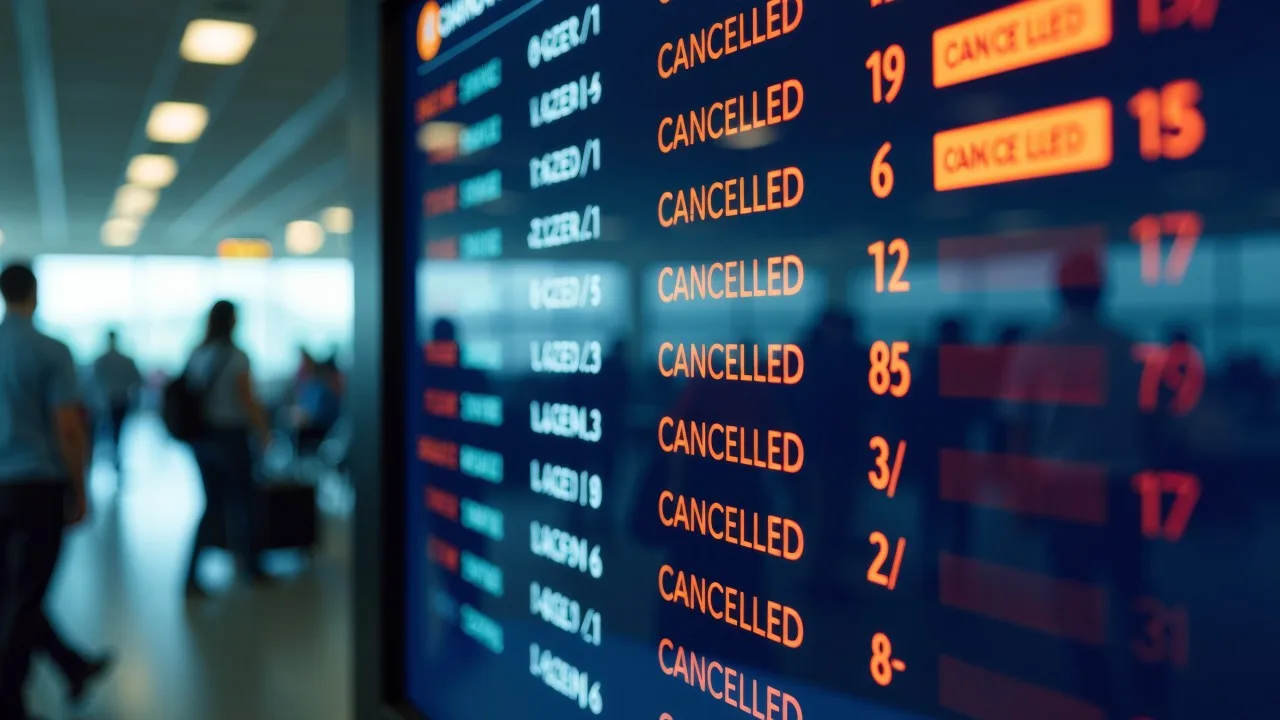
The recent power outage at Heathrow Airport, which resulted in an 18-hour operational standstill, offered a rare but valuable lens into the complexities of crisis response in a modern, high-functioning infrastructure. While the initial cause—a fire at a nearby substation—was outside the airport’s control, the challenge lay in safely transferring power, rebooting interconnected systems and restoring critical operations across one of the world’s busiest aviation hubs.
What stands out from this event is not a question of blame or fault but a powerful reminder of how difficult—and necessary—complete live exercises are. Plans on paper can only go so far. The reality of testing those plans end-to-end, under pressure, in real-world conditions, builds the confidence and clarity required in a true crisis.
At Horizonscan, we recognise that full-scale simulations can be disruptive and resource-intensive. But they are among the most effective tools for surfacing unseen gaps, testing interdependencies and strengthening coordination across teams and systems. They build readiness and resilience, which turns a crisis into a comeback.
Fundamentally, robust crisis preparedness rests on training, testing and trust.
- Training ensures individuals understand their roles and responsibilities under pressure, so the basics are second nature when the unexpected hits.
- Testing exposes what theory can’t: the cascading effects of delays, decision fatigue and how systems and people honestly behave under stress.
- Trust is built through experience. When teams rehearse, they respond with speed, confidence and cohesion.
Live exercises create a safe but realistic space for making mistakes, challenging assumptions and building institutional muscle memory. The more authentic the scenario, the more valuable the learning. Whether simulating a cyber-attack, a supply chain disruption or a systems-wide power outage, the ability to walk through an incident step-by-step enables organisations to strengthen their plans and their people.
True resilience isn’t just about redundancy and response time—it’s about knowing what to do when everything gets noisy and being ready to lead with clarity. That readiness is only earned through practice.
Simulating the Real Thing: Our CSEs in Action
So far in 2025, we’ve delivered Crisis Simulation Exercises (CSEs) across various scenarios and geographies, helping organisations stress-test their response in the face of fire, communications breakdowns, infrastructure failure and reputational risk. Here’s a snapshot of where we’ve been:
🔹 UK – Fire, media, ransomware and Crisis communications.
🔹 Europe – Fire, media CSEs in Guadalajara, Spain and Cameri, Italy.
🔹 Australia (Remote delivery) – Loss of Internet and water scenarios in Victoria and Queensland.
🔹 USA – Leadership workshops with SMEs and manufacturers, combining scenario-based simulations with strategic tabletop discussions. We focused on navigating regulatory uncertainty, responding to reputational crises and preparing for extreme weather events. These sessions also allowed us to explore key fundamentals of resilience-building—training, testing and trust. By creating safe but realistic learning environments, teams could rehearse critical actions, build confidence and stress-test assumptions under pressure.
Each exercise is tailored and immersive, designed to test teams’ decision-making, coordination and confidence under pressure—because when the unexpected arrives, preparation separates disruption from disaster.
What We’ve Been Up To: Highlights from Horizonscan
🌍 DRI2025 – Las Vegas We attended the DRI International (Disaster Recovery Institute) International Business Continuity Conference in Las Vegas in February. The focus? Understanding the risks of 2025—and what it means to be prepared. From climate extremes to geopolitical shifts and cyber threats, it’s clear that resilience must be more than a policy—it must be a mindset.
🌐 Global Risks Webinar—WEF & ECIIA We also attended the Global Risks Report 2025 webinar hosted by World Economic Forum and ECIIA. Key takeaways included the growing importance of scenario planning in a fragmented geopolitical environment, the limitations of insurance in climate risk and the rising corporate exposure to misinformation and AI-driven threats. These conversations reflect the volatile, complex and urgent world we plan for.
🇮🇳 UK-India Climate Adaptation & Resilience Trade Mission Will Scobie MBCI CMgr CBCP and John Benfield CBCV CMgr joined the Department for Business and Trade and British High Commission in India on an exciting mission across Mumbai, Surat and Chennai, engaging with leaders from MITRA, IIT Mumbai and the South Gujarat Chamber of Commerce. Key risks explored included urban landslides, extreme weather, low probability and high-impact scenarios like asteroid threats. The mission underscored the need for cross-border collaboration and practical resilience in a changing climate.
🛫 On the Ground in the US, Italy and Ireland Our teams have also visited sites in the US and Europe, working with manufacturers and SMEs on risk workshops, leadership coaching and real-world scenario testing. From regulatory stress to tornado preparedness, the goal remains: build resilience, reduce risk and strengthen response.
🏆 Celebrating Excellence at the National Insurance Awards We were proud sponsors of the 2025 National Insurance Awards, joining industry leaders in recognising innovation and excellence.
🥂 Shortlisted for the CIRMagazine Business Continuity Awards 2025 We’re honoured to be nominated in four categories this year:
– Testing & Exercising
– Strategy of the Year
– Consultancy of the Year
– Specialist Company of the Year.
A huge thank you to the Horizonscan team, whose work makes this possible. We’re looking forward to the ceremony in June!
🎓 Academic Achievements Worth Celebrating We’re thrilled to share that two team members have achieved significant milestones: Simie Beecher MSc CMIRM AMBCI CBCP received the Best Performing Student award for their MSc in Risk, Crisis and Resilience Management at the University of Portsmouth and John Benfield CBCV CMgr graduated with distinction in their MBA from Kent Business School . Their commitment to learning and excellence continues to shape our work and culture. As an employee-owned company, we constantly look for ways to train and add to our team. This week, we are training with the BSI and looking into the risks around AI.
Looking Ahead
In a world of accelerating uncertainty, resilience is not a luxury—it’s a leadership imperative. As we reflect on recent disruptions and look to future risks, our message is simple: practice matters. Whether you’re managing an airport, a data centre or a global supply chain, the time to test is before the crisis.
Thank you for staying connected with us. If you’d like to discuss testing, planning or preparing your organisation for the unexpected, we’re always here to help.
— The Horizonscan Team